- Home
- Embroidery business
HOME EMBROIDERY BUSINESS
Embroidery from Home: How to Turn Your Stitching into a Real Business
Four proven paths from hobby stitcher to home business owner — with honest earnings, practical first steps, and none of the vague "follow your passion" fluff.
You know that quiet moment when you finish a piece of embroidery and think, "I wonder if I could actually sell this?"
Maybe you've been stitching for years — filling frames, gifting pieces to friends, building a collection of patterns you've designed on scraps of graph paper. Or maybe you're newer to needlework but already feel that pull toward something more than a hobby.
Either way, here's the good news: there are real, practical ways to turn your embroidery skills into income from home. Not pipe dreams. Not vague "follow your passion" advice. Actual paths that other stitchers — including me — have walked.
In this guide, I'll show you four proven ways to build a home embroidery business, from the quickest way to start earning to the most scalable long-term option. Pick the one that fits your skills and ambitions, or combine a couple — most of us do.
Four Ways to Build a Stitching Business
Each path works on its own or alongside the others. Many stitchers start with one and add more as confidence grows.
Design & Sell Patterns
The most scalable option. Create once, sell many times. This is how I built my business.
How pattern selling works →Stitch for Designers
Put your skills to work test stitching patterns before they're published.
What test stitching involves →Teach What You Know
Share your skills locally or online, from kitchen-table workshops to video courses.
Ways to teach stitching →Sell What You Stitch
Turn finished pieces and handmade items into income at fairs and online.
See what sells best →Design & Sell Your Own Patterns
Create once, sell forever — the most scalable path to a real stitching business
If you enjoy planning stitch layouts, choosing colour palettes, or thinking "that would make a lovely blackwork piece," you might already be a designer — you haven't published yet, that's all.
Pattern design is the closest thing embroidery has to passive income. You create a design once — chart it, write clear instructions, photograph the finished piece — and then sell it as a digital download over and over again. No stock to hold, no postage to manage, no having to stitch another copy every time someone buys.
You Don't Need to Be an Artist
This is the part that stops most people, so let me say it clearly: you don't need to be able to draw. You need an idea, some graph paper (or charting software), and a stitcher's sense of what looks good when it's finished.
Many of the best-selling embroidery patterns are beautifully simple — geometric blackwork fills, small cross-stitch motifs, sampler layouts. The skill is in the stitching knowledge, not the illustration.
This is how I started — check out my About Me page for the full story.
Where to Sell Your Patterns
- Your own website — pair patterns with tutorials and blog posts to attract visitors through search. This is the most sustainable long-term approach.
- Etsy — ideal for digital pattern downloads. Low barrier to entry, built-in audience.
- Payhip or similar platforms — simple storefronts for digital products with no monthly fees.
- YouTube or Skillshare — pair your patterns with video tutorials for a double income stream.
- Social media — build a following by sharing in-progress shots and the occasional freebie.
Getting Started
Start with beginner-friendly designs — a small cross-stitch motif, a geometric blackwork pattern, or a simple sampler. Offer a free pattern to build your audience, and gently introduce paid designs once you have a few fans stitched into place.
Price digital patterns from around £3–5 for small designs up to £8–15 for larger, more complex ones. Bundles and collections can command more.
Stitch Your Own Business
My ebook walks you through every step of launching a pattern design business — from your first chart to pricing, branding, marketing, and building a website that brings customers to you.
It's 121 pages of everything I wish I'd known when I started, including the mistakes I made so you don't have to.
£19.95 — instant PDF download, with an 8-week money-back guarantee.
Find Out More →Stitch for Designers
Your skills are in demand — even if you've never designed a pattern yourself
Many embroidery and cross-stitch designers need skilled stitchers to "test stitch" their patterns before publication. If you're neat, reliable, and can follow instructions carefully, this is a lovely way to earn from your stitching without needing to design anything yourself.
What Test Stitching Involves
- ✓ Follow the pattern exactly as written
- ✓ Spot any confusing or unclear instructions
- ✓ Confirm whether the thread quantities are right
- ✓ Send back a beautifully stitched piece the designer can photograph
It's satisfying work — you're helping bring a design to life while sharpening your own skills. And you'll often receive the pattern, threads, and fabric for free, plus payment for your time.
How to Find Test Stitching Work
- Follow your favourite designers on Instagram or Pinterest. Comment on their posts, share your stitching — start a little conversation.
- Offer to test a pattern for free at first to build trust. Once they see the quality of your work, paid opportunities usually follow.
- Ask at your local needlework shop (if you still have one) — many need stitched samples for display.
- Join stitching communities on Facebook or forums — designers often post when they need testers.
What does test stitching pay?
Rates vary widely. Some designers pay a flat fee per project (typically £20–60 depending on size and complexity), while others provide materials plus a smaller fee. A few work on a materials-only basis. As you build a reputation, you can be more selective about which arrangements work for you.
Teach What You Know
Pass on your skills — and maybe make a bit of a name for yourself too
Not all embroidery income involves a needle in your hand the whole time.
If you've been stitching for years (or even long enough to have made your fair share of wonky French knots), teaching others might be your next best opportunity.
Needlecrafts are making a real comeback. People want to learn how to embroider, try cross stitch for the first time, or finally tackle that Hardanger kit they've been staring at for months. And they'll pay someone calm and encouraging to guide them through it.
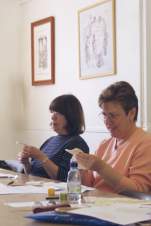
Students taking part in one of my classes at my local needlework shop
Local Classes: From Village Halls to Craft Shops
Offer beginner classes in a church hall, at your local needlework shop, or even around your own kitchen table with a pot of tea and a packet of digestives.
You don't need to be flashy. Friendly, clear, and encouraging will do the job nicely. Bring finished samples so people can see the end goal, prepare a project that can be completed in a session or two, and always have a follow-on lesson ready — enthusiasm is catching.
Back in the day, I taught at some of the big needlework shows in London, Birmingham and Harrogate. After my demo, I'd often end up with a little stampede of eager kit-buyers following me back to my booth. Like the pied piper — but with thread.
If you do shows, take a helper — I learned the hard way that you can't teach and run your stall without sprouting an extra pair of arms.
Give Talks to Groups and Clubs
This one's a bit nerve-wracking at first — I won't pretend otherwise. I gave talks to all sorts of groups over the years, from a cosy village craft club of ten to a room packed with over a hundred retired lacemakers. Oh, the butterflies!
But here's the thing: people who've come to hear you talk about embroidery are already interested. They want to be there. And once you get started and see those nodding heads, the nerves settle into something closer to excitement.
The money works well too. You'll typically receive a talk fee (often £30–75 depending on the group and how far you travel), and if you bring kits or patterns to sell afterwards, the add-on sales can be surprisingly good. People who've spent an hour listening to your passion are primed to buy.
Keep your travel expenses in mind. A talk in the next village is pure profit, but driving two hours each way eats into your earnings. I learned to factor in petrol and time when deciding which invitations to accept — and to say a polite "no thank you" to the ones that didn't add up.
Teach Online: Reach Stitchers Around the World
Online teaching is booming, and it's easier than ever to get started. Record a class from your dining room table or offer live Zoom workshops. Some platforms even do the marketing for you.
Video Platforms
Skillshare, Udemy, YouTube — record once, earn ongoing. Ideal if you're comfortable on camera (or willing to learn).
Your Own Website
Teachable, or host it yourself with blog posts and free tutorials to draw visitors in. More work upfront, but you keep full control.
What Can Teaching Earn?
Local classes typically charge £15–30 per person per session. With 6–8 students, that's a tidy afternoon's income. Online courses on platforms like Teachable or Udemy can earn anywhere from a few pounds a month to a steady stream if you build a catalogue of classes over time.
Pro Tip: Create Beginner Kits
Sell a matching kit with your class — fabric, threads, needle, instructions, the works. Students love having everything in one parcel, and it adds a lovely extra income stream. It's the difference between selling your time once and creating something you can sell again and again.
Sell What You Stitch
Turn your finished pieces and handmade creations into income
If your talent leans more toward making than teaching or designing, there's always a market for beautifully handmade embroidered items. From framed pieces and personalised gifts to embroidered accessories and home decor, people will pay well for the kind of quality that only hand stitching delivers.
What Sells Well
Personalised Gifts
Embroidered baby items, wedding samplers, anniversary pieces. Anything with a name and a date has built-in emotional value.
Hoop Art & Framed Pieces
Finished embroidery ready to hang. The "hoop art" trend has brought stitching into modern home decor.
Embroidered Accessories
Tote bags, needle cases, pin cushions, bookmarks. Small items with relatively quick turnaround.
Toys & Decorations
Handmade soft toys and seasonal decorations — especially at Christmas and for children's rooms.
Don't overlook handmade greetings cards either — they're quick to make, easy to personalise, and sell brilliantly at fairs.
Where to Sell
- Etsy — ideal for both one-offs and repeatable items
- Facebook Marketplace — great for reaching local buyers
- Local craft fairs — still a lovely way to meet your market face-to-face
- Instagram or Pinterest — perfect for showing off your makes and linking back to your shop
My Craft Fair Days
I sold soft toys and puppets for years — on rickety decorators' paste tables set up in a field, and solid hardwood desks in the library of a stately home, both with a pure white sheet laid on top as a makeshift tablecloth.
Some days I'd bring most of my items home with me, whereas at others I almost wished I had a bodyguard to keep the cash box, heavy and jangling, safe on the journey.
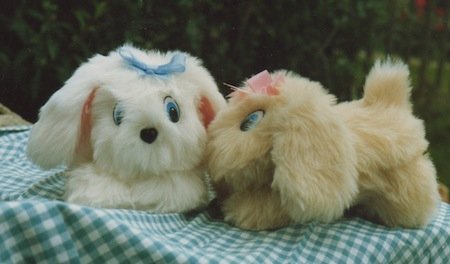
Some of my soft toy puppies, ready for their new homes
Sadly, I had to retire my soft toy stall after the fur fluff aggravated my asthma. If you're in the same boat, you might stick to embroidered items instead — hoop art, samplers, or stitched accessories. Equally charming, and much easier on the lungs.
Start Small, Then Grow
Begin with 2–3 items you enjoy making. Make sure your finishing and presentation does your stitching justice — it makes all the difference to how buyers perceive the value. Take lovely, natural-light photos. Add a short, heartfelt description — people love a bit of story behind their purchase.
Once you've had a few sales, ask buyers for reviews — they go a long way toward building trust. And consider offering a "made to order" version of one item (like a personalised sampler in any colour scheme). This keeps inventory low but shows you're open for business.
What Can You Earn? A Quick Guide
Every stitcher's situation is different, but here's an honest sense of what each path can bring in:
Notice the pattern? The paths that scale best are the ones where you create something once — a pattern, a course, a kit — and sell it many times. That's why pattern design is such a powerful option for stitchers who want to build something lasting.
Ready to Start Your Embroidery Business?
You don't need a studio, a business degree, or permission from anyone. You need a needle, some thread, a quiet space to work, and the willingness to begin.
Pick one path from this page and take your first step:
- ✓ Chart a simple pattern on graph paper and list it on Etsy
- ✓ Message a designer you admire and offer to test stitch a pattern
- ✓ Plan a beginner class — tea, biscuits, and a simple first project
- ✓ Photograph your best finished piece and put it up for sale
Each small step is a stitch toward something bigger.
If you wait until you feel ready, you'll be waiting forever. Stitch crooked if you must — just start.
Need a Step-by-Step Guide?
If you're drawn to pattern design — or you'd like to understand how to turn any of these paths into a proper home business — my ebook Stitch Your Own Business covers every step.
From finding your niche and pricing your first pattern to building a website and marketing your work — it's 121 pages of practical, no-fluff guidance from someone who's done it.
Learn More About Stitch Your Own Business →£19.95 · Instant PDF download · 8-week guarantee
Stitchin' Times Newsletter
Stay connected between projects
If you'd like occasional updates from my embroidery room, including new patterns, gentle tips, and little things I think you might enjoy, you're warmly invited to join the Stitchin' Times newsletter.
About Me - Contact Carol - Privacy Policy - Site Map - Testimonials
Please do not copy the content of this site. It is protected by Copyscape.
Copyright © 2006- www.needlework-tips-and-techniques.com All rights reserved