- Home
- Crazy Quilting
- Crazy Quilt Embroidery
Crazy quilt embroidery - easy stitches you can use to embellish your project
Crazy quilt embroidery has fascinated stitchers for generations.
Its rich history dates back to the Victorian era, when it was born out of the desire to create beautiful, hand-stitched pieces of art from scraps of cotton, silk, and velvet.
These exquisite works of art were never meant to be practical; instead, they were designed to showcase creativity and skill with a needle.
The hand-embroidered seams and motifs on a muslin backing cloth created timeless treasures that were passed down from generation to generation. The haphazard designs and mismatched fabrics added to their charm.
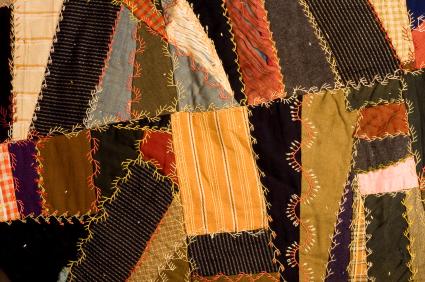
Crazy Quilt Seam Treatments
A variety of embroidery stitches were, are still are, used in crazy quilts. These include...
- blanket stitch
- chain stitch
- chevron stitch
- cretan stitch
- feather stitch
- French knots
- Colonial knots
- herringbone stitch
- satin stitch
- stem stitch
- split stitch
...along with many more.
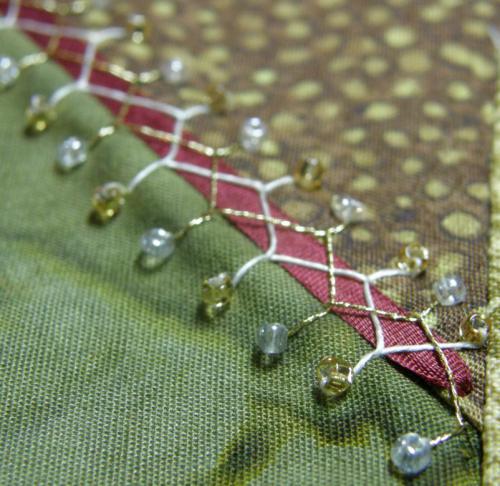 Crazy quilt seam treatment using cretan stitch
Whereas the seams in most needlework are hidden, in crazy quilt embroidery they are designed to be visible. This reminds me of the Japanese craft of Kintsugi where broken pottery is mended using a golden paste, emphasizing its imperfections and history.
Crazy quilt embroidered motifs
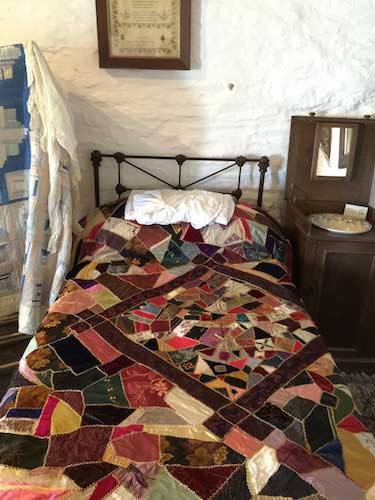
While it's often associated with decorating seam lines, the true beauty of crazy quilting lies in the intricate motifs that adorn the open areas of the patches. These motifs can range from delicate floral patterns to whimsical depictions of animals, such as squirrels, cats, and even spiders with their webs.
In the Victorian era, the influence of oriental design became apparent, with motifs like pagodas, dragons, lotus flowers, and fans becoming popular. Some quilters took this inspiration to the next level by piecing and then decorating fans, adding an extra layer of complexity to their designs.
One of the most liberating aspects of crazy quilting is its rejection of traditional quilting patterns. Unlike the rigid squares, diamonds, and hexagons of the past, crazy patchwork pieces burst free from these constraints, embracing a more free-form approach to design.
This creative freedom allowed quilters to express themselves in unique and innovative ways, often incorporating even the tiniest fabric scraps into their designs.
At its core, the crazy quilt is a reflection of the quilter's personality, values, and experiences.
Colour in Crazy Quilts
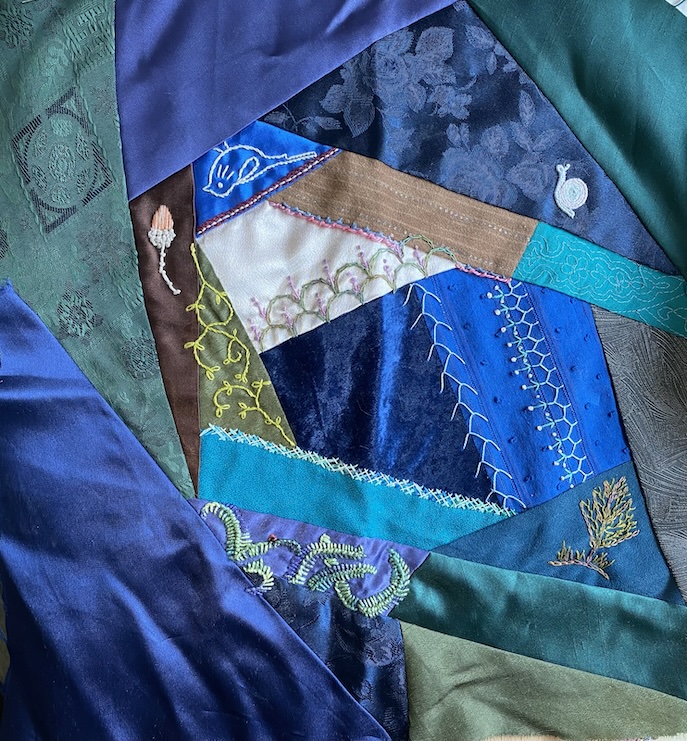
One of the most striking aspects of this unique style is its disregard for fabric colour. Rich crimsons, mellow golds, spring greens, and cornflower blues are all mixed together with dark and neutral hues.
This deliberate rejection of a single dominant colour creates a visually striking effect, as if the quilt is alive with energy and movement.
Modern crazy quilt embroidery and embellishment
After the Victorian era, crazy quilting lost its popularity. Tastes were less extravagant and more restrained.
A new generation of stitchers revived the craft in the 1980s. No longer restricted to bedcovers and throws, they created pillows, wall hangings, bags, purses, vests, needlecases and pincushions.
Crazy quilts are now experiencing a revival, with quilters rediscovering their expression in scrap quilt making. Crazy quilters welcome the whimsical, the quirky and the unusual into their work while embracing the beauty of imperfection.
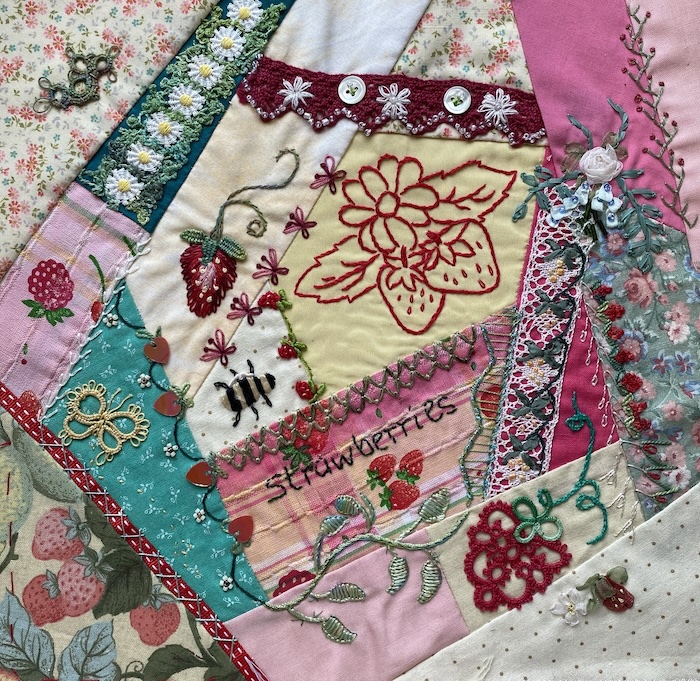
Crazy quilt embroidery is even more lavish than in the past, with blocks encrusted in stitchery and embellishments of all kinds, including buttons, beads, ribbons, braids, lace, tatting and charms.
My first attempt at crazy quilt embroidery
You can see my first attempt, worked on cotton fabrics, in the photograph below. I made this into a book cover which was passed around at my cousin's wedding reception for everyone to write messages for the happy couple.
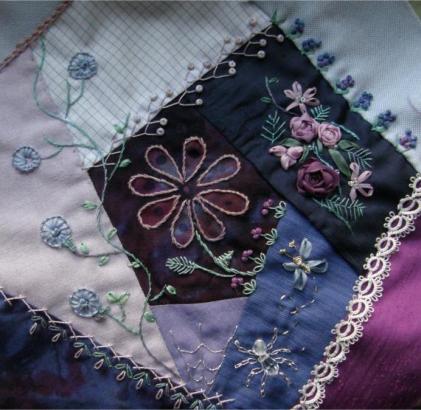 My first piece of crazy quilt embroidery
It didn't take long for me to become addicted!
The beauty is that you can indulge in all your favorite techniques at once. The craft lends itself to freestyle embroidery.
Cross stitch, worked over waste canvas, is also possible. Silk ribbon embroidery adds even more to your project.
The difficulty is knowing when to stop!
But my job as an "enabler" is to get YOU started. So let's look at what you will need in your workbasket.
What do you need to start crazy quilt embroidery?
Fabrics for crazy quilt embroidery
If you have done regular patchwork, you will likely have plenty of scraps already. If not, other sources include...
- Clothes your children have grown out of
- Stained silk ties (discard the stained areas)
- Bridesmaids dresses
- Old curtains
- Evening dresses that have gone out of fashion
Note: Please keep in mind, that if you intend to wash your quilting in the future, all the fabrics used should be pre-washed. This is especially important if you mix scraps with new fabrics.
The following list gives examples of fabrics that you might like to include in your projects.
- brocade
- crepe de chine
- damask
- dress weight velvets
- lace
- linen
- organza
- satin
- silk
- taffetta
- velour
- voile
You might prefer to stick to plain fabrics or those with a small print. Although it can be effective if you embroider over a large printed motif.
Keen to get started straight away? Nip over to my page which describes how to piece your foundation block.
Threads and fibers
Don't you just love embroidery threads? Much of the fun in crazy quilt embroidery is trying them all out.
Mix and match natural fibres with man-made options. Shiny with matt. Silk with wool. Fine threads with heavier ones. Flat with twisted. Metallics with rayons. Don't forget silk ribbons!
Anything goes when it comes to thread. If it is too thick to pass through your fabric, then couch it down!
Needles for crazy quilt embroidery
Useful needles include sharps, betweens, darners, crewel, embroidery, chenille, beading and even the good old tapestry needle.
Another one that is useful is a milliners or straw needle, which is the same thickness from tip to end, allowing bullion stitch, cast-on stitch or drizzle stitches to be executed.
Try to use the right size needle for the thread, so that it neither rubs at the eye or keeps slipping out of the needle.
Other embellishments
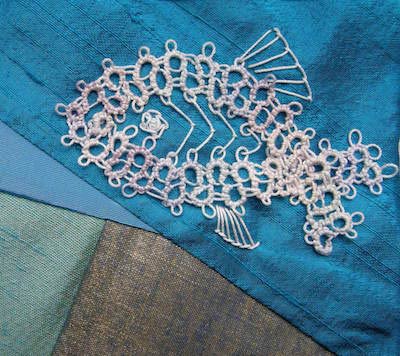 A tatted fish I used on a crazy quilt block
Other items that are great to have handy for embellishment are:
- lace yardage and motifs
- tatted or crochet edgings
- buttons, with holes or shanks on the back
- metal findings and beads of various sizes, shapes and colours.
If you enjoy other crafts, such as lacemaking or tatting, your crazy quilt blocks are the ideal opportunity to use your practice samples, or odd pieces that have never found a home.
Ready to have a go at crazy quilt embroidery? OK, go and collect your fabrics and threads, and meet me back at the piecing a crazy quilt block page.
Oh yes, you might want to bookmark this page so you can come back and get started.
Or better still, subscribe to my newsletter at the bottom of this page so we can keep in touch.
What did you think of this page?
Did it give you all you needed or did anything else spring to mind? If there was something missing give me a shout – or let me know if this page proved helpful (do let me know which page you are commenting on).
Would you like a direct reply? Just pop your email address below, and I'll be in touch.
Stay connected between projects
If you’d like occasional updates from my embroidery room, including new patterns, gentle tips, and little things I think you might enjoy, you’re warmly invited to join the Stitchin’ Times newsletter.
No pressure. Just a friendly note now and then to keep you inspired.
You Might Like These
Piecing a Crazy Quilt Block using the stitch and flip method
Get creative with fabric scraps! Learn the stitch and flip technique to make a one-of-a-kind crazy quilt block. Follow my step-by-step guide.
Crazy Quilting: A Skillful Balance of Precision and Imagination
Crazy Quilting: A fusion of tradition and creativity - Join the quilt-making revolution!
Crazy Quilting Ideas and how they change as you work a block
Explore Crazy Quilting Ideas and how they evolve as you work a block. Learn how to adapt your design, replace elements, and tell a story with your project.


Copyright © Carol Leather - 2006-2024
About Me - Contact Carol - Privacy Policy - Site Map - Testimonials
Please do not copy the content of this site. It is protected by Copyscape.
Copyright © 2006- www.needlework-tips-and-techniques.com All rights reserved