- Home
- Needlepoint
- Tent Stitch
Tent Stitch Guide: Learn Half Cross, Continental, and Basketweave Stitches
Starting needlepoint can feel overwhelming, but the tent stitch is one of the easiest and most useful needlepoint stitches.
In this guide, you'll learn three variations: half cross, continental, and basketweave stitch.
These simple, diagonal stitch variations are perfect for both beginners and experienced stitchers, whether you're working on a full design or adding fine details.
However, you may notice a problem that I encountered when I first began - my needlepoint canvas was distorting into a parallelogram instead of staying a neat rectangle!
I soon learned that the way you work the tent stitch affects both the look and durability of your project.
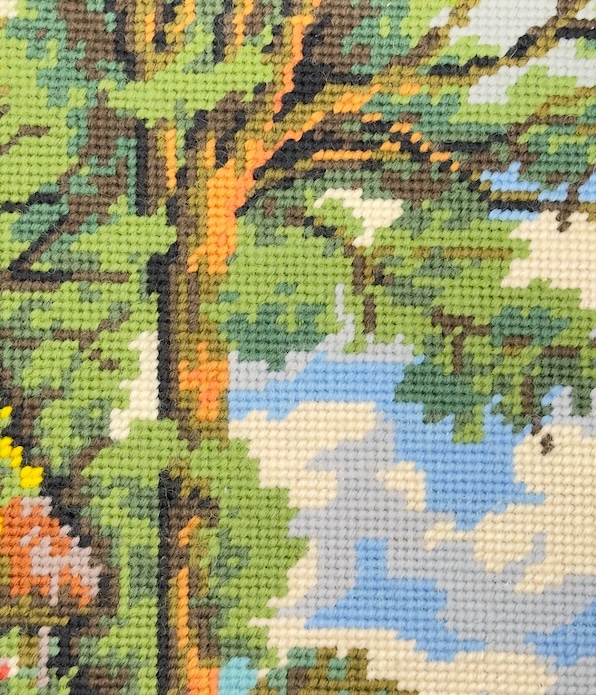
Half Cross Stitch – The Simplest Tent Stitch Variation
The half cross stitch is suitable for items that don't get much wear, like wall hangings or framed pictures, due to minimal yarn on the back.
Before you start stitching, place your canvas in a needlepoint frame. This helps prevent warping caused by uneven tension, keeping your design in perfect shape.
Use a blunt tapestry needle to stitch with as this won't pierce the canvas threads.
As it sounds, this is just the first leg of a cross stitch. To work it follow the guide I gave for cross stitch, without making the return journey.
Using half cross stitch may lead to a messy look because you bring the needle up through a hole that already has yarn, which can bring loose fibers to the front.
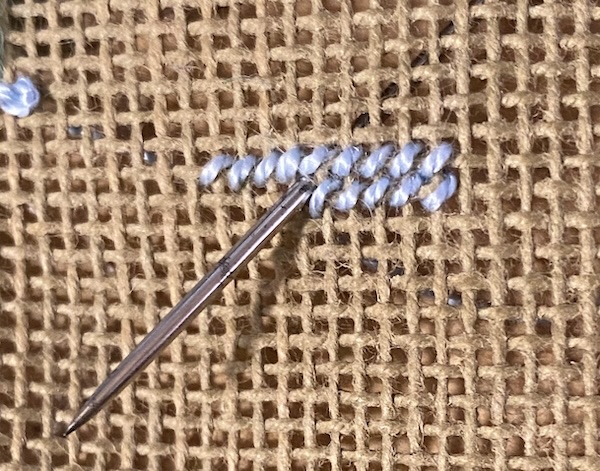
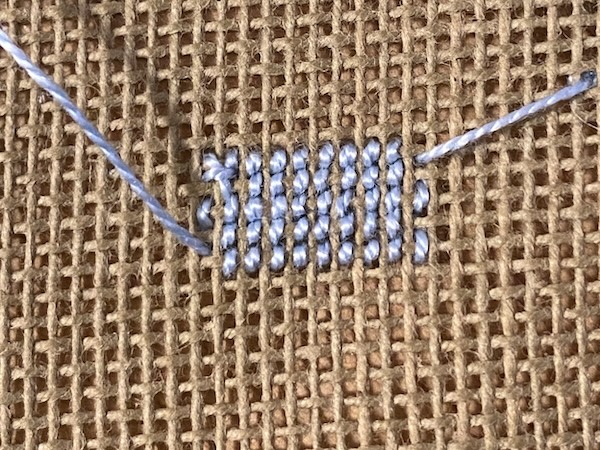
Continental Tent Stitch – More Durable & Versatile
The extra yarn on the reverse of the canvas makes the continental stitch more durable.
Since continental stitch uses more thread than half cross stitch, check your kit's instructions to make sure you have enough yarn. Running out mid-project can be frustrating and may lead to visible dye lot differences if you buy more later.
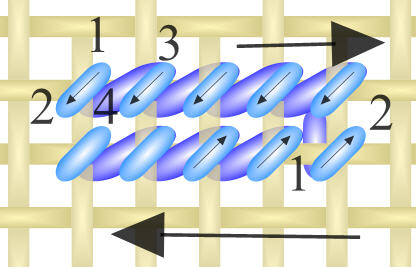
Start the top row by following the numbering on the diagram. Each stitch is worked in a downwards diagonal direction over 1 canvas thread (top right to bottom left).
Take the needle back up to 3 to start the second, leaving a longer diagonal stitch on the back (as shown by my purple "stitches" on the diagram).
When you reach the end of the row bring your needle up in the row of holes directly beneath your previous stitch. Then, this time working from right to left along the row, continue following the diagram this time working each stitch in an upwards direction (bottom left to top right).
When checking the back of your work note that all the stitches will "lean" in the same direction - apart from that turning stitch at the end of each row.
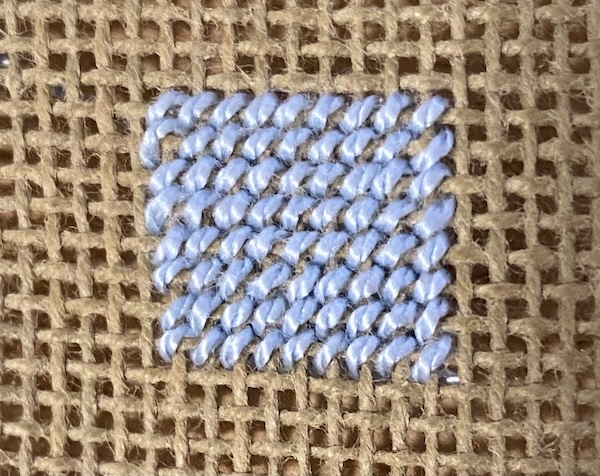 The front looks the same...
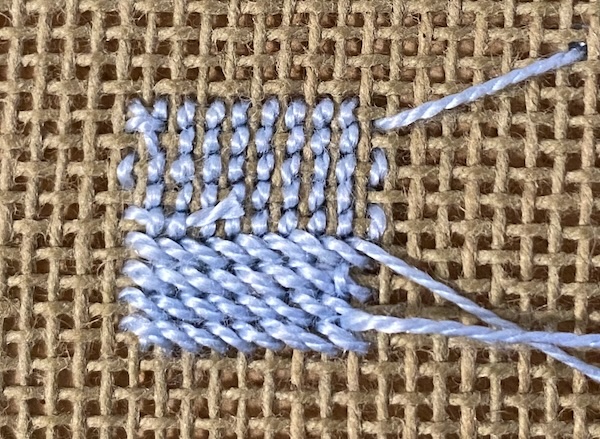 ...but see how much more thread is on the back of the continental stitch rows?
Basketweave Tent Stitch – Best for Large Areas and Even Coverage
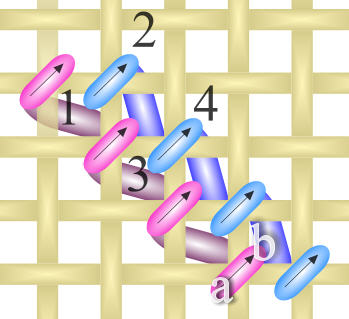
The neatest method of working tent stitch is with the basketweave stitch. This time you are working in diagonal rows. Start with the blue lines on the diagram.
Note: there is a distinction between the stitch direction and row direction when working the basketweave stitch. This can be a little confusing, but if you follow the diagram you should soon fall into a rhythm.
Each stitch is worked upwards, but the actual row is traveling down the canvas. You will get an almost vertical stitch on the reverse when working down the canvas and a horizontal one on the back when working back up to the top.
As with the method above this way of working does use a little more yarn, and a little extra concentration is also needed.
I have shown the second row in pink.
You start with stitch a-b and this time both the stitches and the row are going upwards. The stitches on the back will be almost horizontal.
This variation is named for its basketweave appearance, which forms on the back after a few rows. Check for mistakes by looking for stitches going in the wrong direction, which spoil the weave. Only the stitches were you move to a new row should be diagonal.
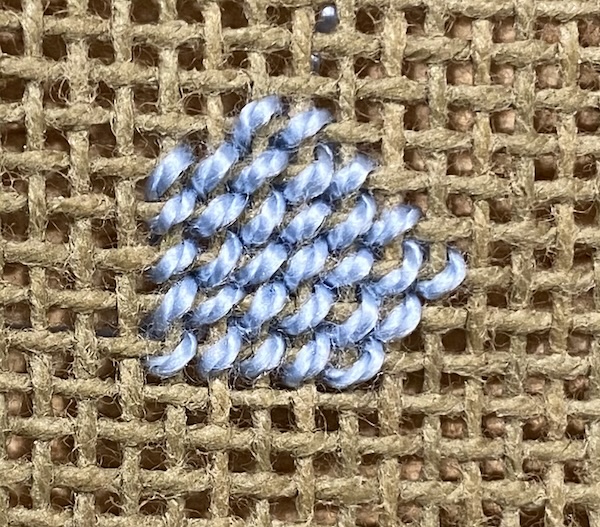
 The back of basketweave stitch appears woven
Basketweave preserves the canvas shape while you work but requires more practice. Use it for large background areas, but be prepared to adjust for frequent colour changes.
Quick Recap: Which Tent Stitch Should You Use?
- Use Half Cross Stitch for framed needlepoint or decorative pieces where durability isn't a concern.
- Use Continental Stitch for projects that will get more wear, like pillows or bags.
- Use Basketweave Stitch for large areas where you want to maintain perfect canvas shape.

Get Stitching!
Want to master tent stitch? Try these variations today! Share your progress in the comments or sign up for our free newsletter to get expert needlepoint tips.
You might like these
What is a laying tool and how do I use one?
Instructions for using a laying tool (or trolley needle) to produce embroidery stitches that lay neatly side by side
Needlepoint for Beginners — Intro, Stitches & Free Patterns
Learn the basics of needlepoint: essential supplies, step-by-step stitches and free printable patterns (tent stitch poppy & Bargello bell).
Rhodes stitch instructions and variations
Learn how to stitch rhodes stitch and its variations. Photos and diagrams show how its done and what it looks like in various threads

Stay connected between projects
If you’d like occasional updates from my embroidery room, including new patterns, gentle tips, and little things I think you might enjoy, you’re warmly invited to join the Stitchin’ Times newsletter.
No pressure. Just a friendly note now and then to keep you inspired.
Copyright © Carol Leather - 2006-2024
About Me - Contact Carol - Privacy Policy - Site Map - Testimonials
Please do not copy the content of this site. It is protected by Copyscape.
Copyright © 2006- www.needlework-tips-and-techniques.com All rights reserved